Technology is changing the way we think about and manage our healthcare. Instead of waiting for problems to arise, we now have access to high-tech tools like wearables that can offer valuable insight into our daily wellness.
When it comes to vein health, devices like smartwatches, fitness trackers, and smart rings can hand you a surprising amount of useful information. Wearables can help you spot potential issues earlier, build habits that support healthy circulation, and work alongside any vein treatments you're already receiving. In short, they help you take a more proactive role in your vein health and your long-term wellness.
Of course, wearables can only tell you so much. If you're noticing symptoms like swelling, heaviness, or visible veins, the most reliable next step is a free vein evaluation with our team, so you get real answers instead of guesswork.
Fitness Trackers: Your Personal Wellness Dashboard
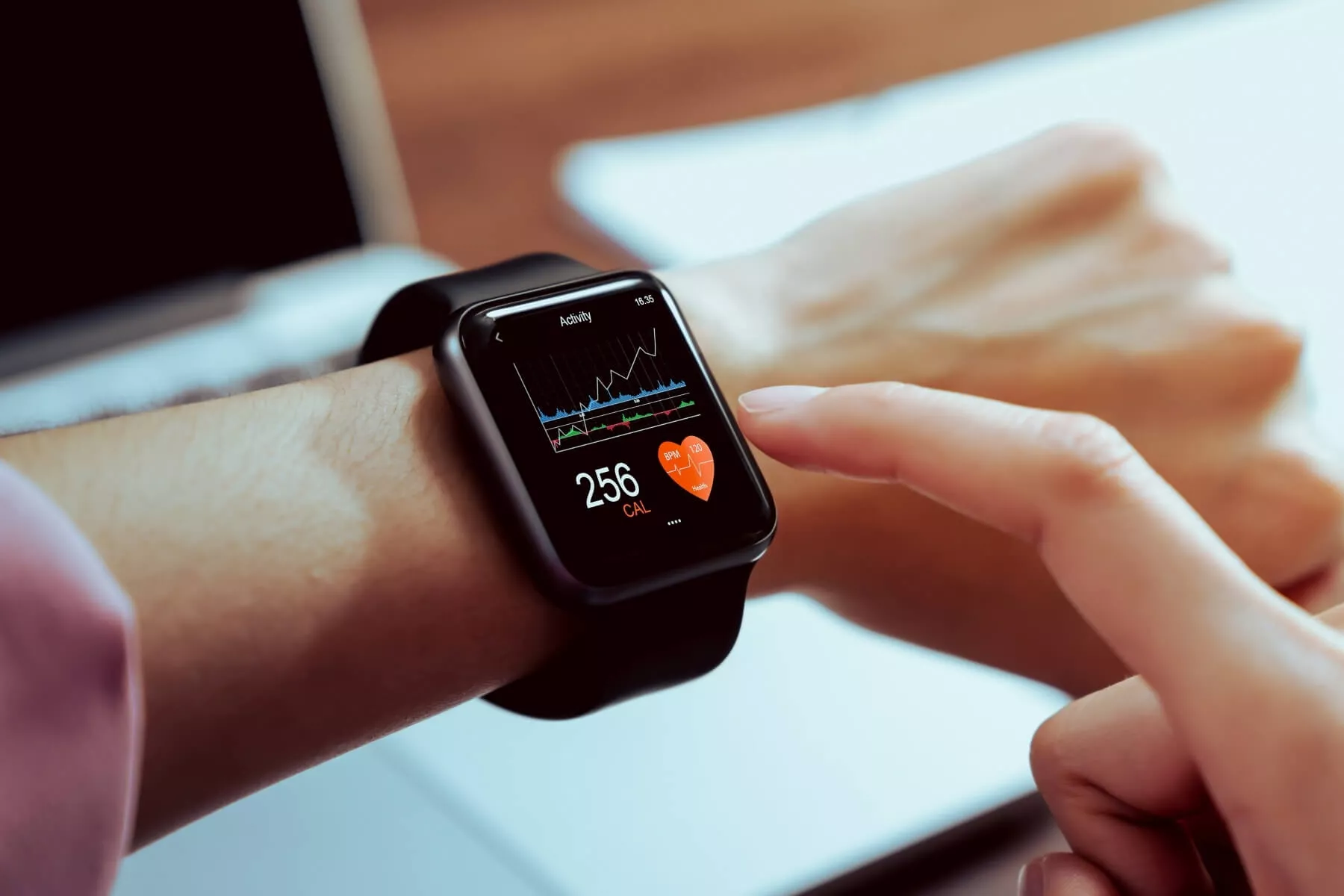
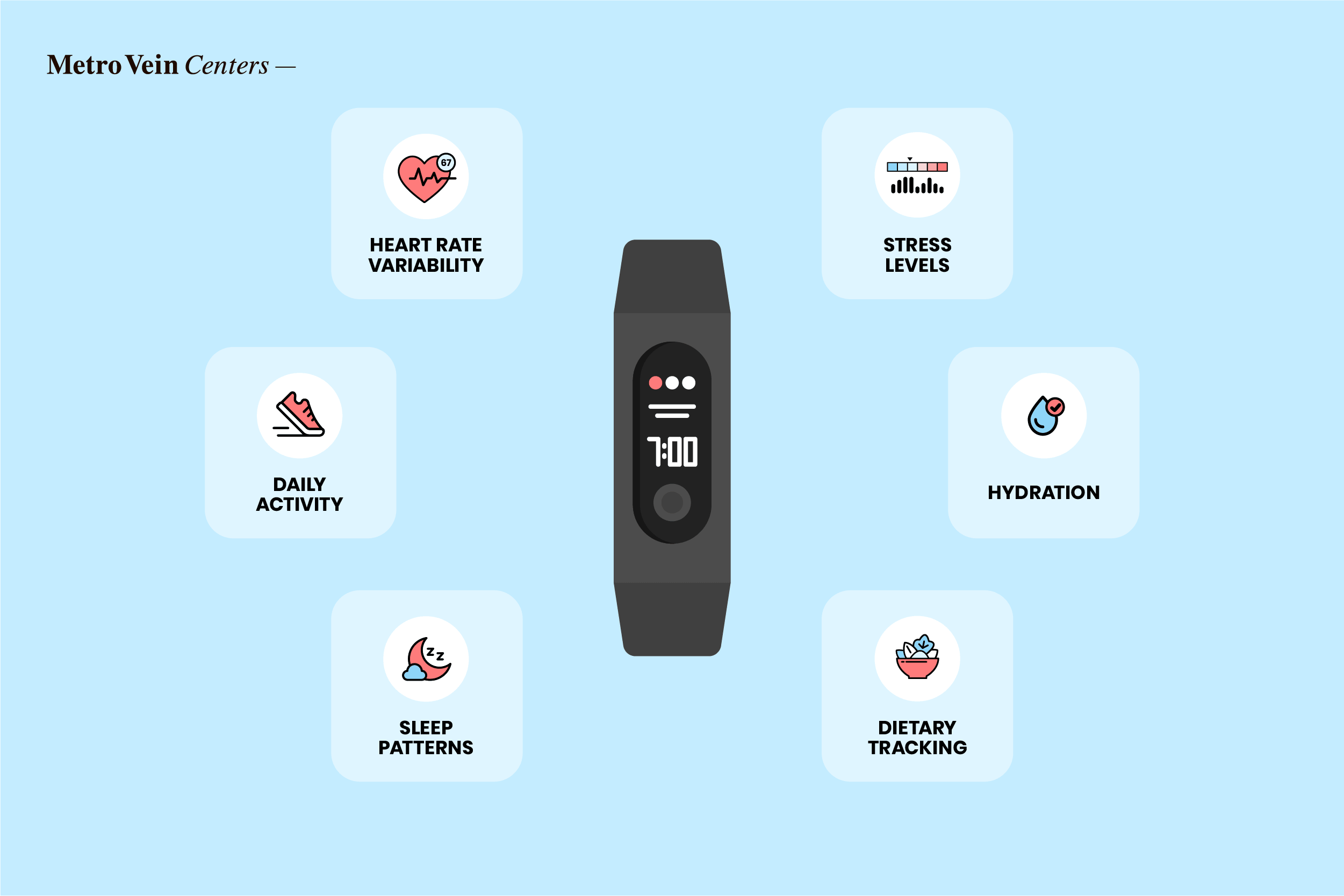
Popular fitness trackers like Oura, Apple Watch, and Fitbit still offer some of the most reliable data out there on how your body is functioning, giving you insights that can help you better manage your vein health. Smart rings like Oura Ring and Samsung Galaxy Ring are now giving people the same core health tracking in a smaller, more discreet form factor. Whether it's on your wrist or your finger, these devices go far beyond counting steps. They also monitor other key health metrics like:
- Heart Rate and Heart Rate Variability: These are your heart beats per minute and the amount of time between each heartbeat. They are both indicators of your physical and mental health.
- Stress Levels: Provides feedback about periods of stress (measured by pulse and heart rates.)
- Daily Activity: Tracks movement levels and encourages an active lifestyle.
- Sleep Patterns: Monitors sleep duration and quality.
- Hydration (via integration with smart water bottles): Encourages and tracks fluid intake.
- Dietary Tracking (through connected apps): Promotes mindful eating habits.
Tracking Physical Activity for Vein Health
Regular physical activity is directly related to vein health. The more active you are, the better your circulation, which lowers your risk of developing venous disease. Fitness trackers offer insight into your body's activity and recovery, and a quicker recovery generally points to a stronger cardiovascular fitness level. That feedback lets you gradually increase your activity intensity and duration while watching how your body adapts and improves over time.

The Benefits of Walking
As we often advise our patients, walking is an excellent exercise for overall cardiovascular health, including those with chronic venous insufficiency and varicose veins. Use your fitness tracker to set achievable walking goals, gradually increasing distance and pace while monitoring your body's response.
Recovery Scores and Vein Health
Many wearable devices now calculate a daily recovery or readiness score, blending heart rate variability, resting heart rate, sleep quality, and activity into a single number. These scores were never built to diagnose vein disease. Still, the connection may be worth paying attention to. Chronic leg discomfort, swelling, and the disrupted sleep that often comes with venous insufficiency can quietly pull a recovery score down over time. If your score has been trending lower alongside achy or heavy legs, it might be a signal worth looking into further.
Wearables During and After Vein Treatment
Wearables can also be a helpful companion once treatment is underway. Tracking daily walking, sleep quality, activity levels, and recovery trends gives you an objective way to see how your body is responding, rather than relying only on how you feel on any given day. For many patients, watching those numbers improve in the weeks after treatment becomes a motivating way to see real progress and stick with healthier habits long term.
Medical Monitoring Wearables: Keeping a Close Watch
Beyond fitness trackers, another category of wearables is medical monitoring wearables, which provide other physiological health metrics that directly relate to vascular health. These include:
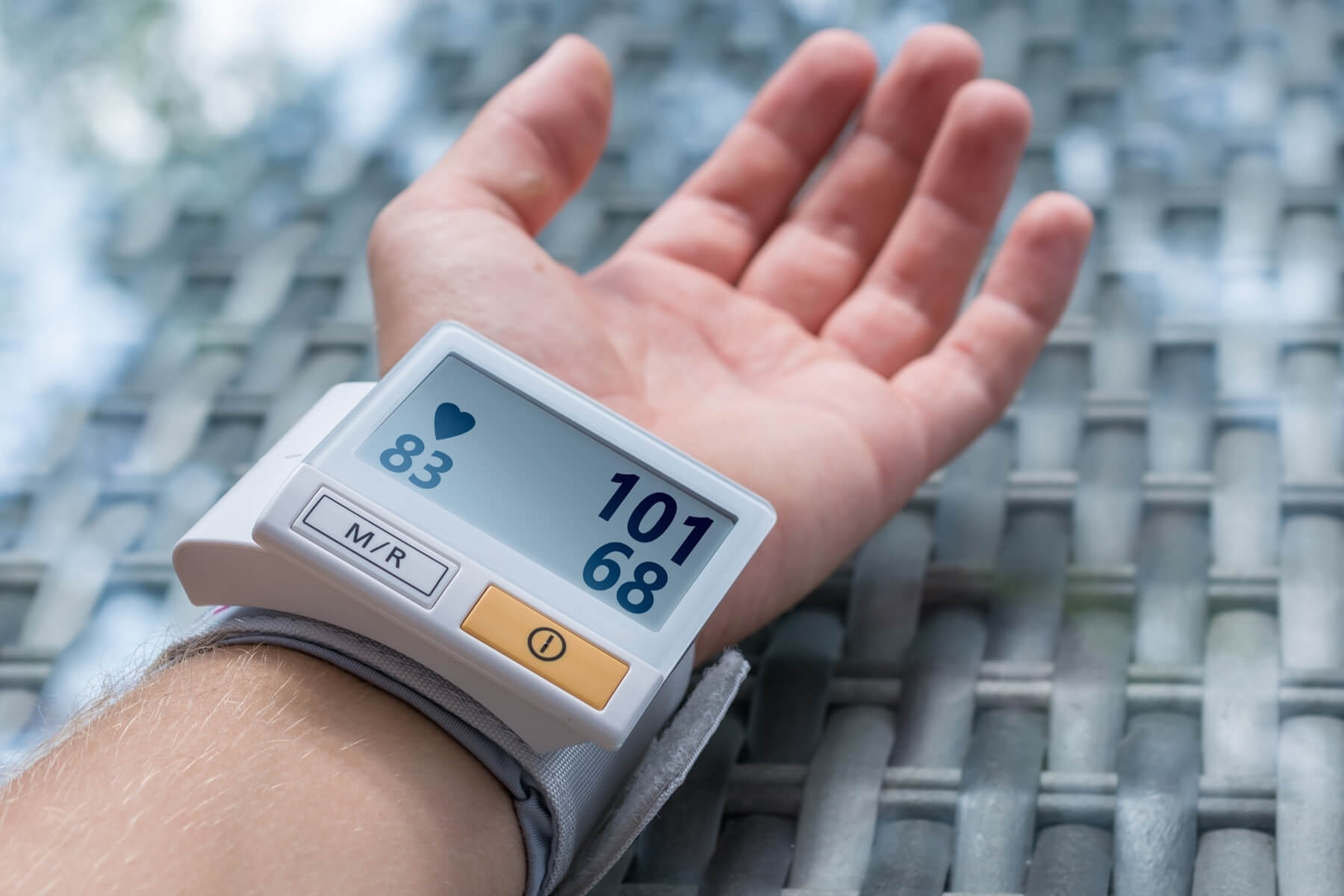
Blood Pressure Monitors: Wearable blood pressure cuffs can help identify hypertension, a risk factor for vein disease.
Blood Glucose Monitors: Continuous glucose monitoring is essential for people with diabetes. People with diabetes are at a higher risk for developing vein disease, as chronically high blood sugar can damage the walls of vessels.
Body Temperature Monitors: While they are usually used for detecting illness, noticeable changes in body temperature can indicate underlying inflammation or infection.
Respiration Rate Monitors: Tracking your breathing patterns can provide information about your cardiovascular functioning and alert you to any potential respiratory issues.
These medical-grade wearables provide specific information about how the systems of your body are functioning, including vein health. Regular monitoring allows for early detection of potential vein health issues and can be a helpful tool in treating vascular disease.
Understanding Chronic Venous Insufficiency (CVI) and What Wearables Can (and Can't) See
Chronic venous insufficiency (CVI) is more than enlarged veins. Over time, increased venous pressure leads to inflammation, which contributes to swelling, aching, skin discoloration, and eventually ulcers in advanced disease. Wearables cannot measure venous pressure directly, but they may detect physiologic changes associated with this inflammatory process.
Although wearables cannot diagnose chronic venous insufficiency, many of the physiologic signals they collect may reflect changes associated with poor circulation. Metrics such as resting heart rate, heart rate variability (HRV), skin temperature, daily movement, sleep quality, and recovery trends may change when chronic leg discomfort, swelling, inflammation, or reduced mobility begin affecting overall health. Looking at these trends over time—not individual readings—may provide useful clues that something deserves further evaluation.
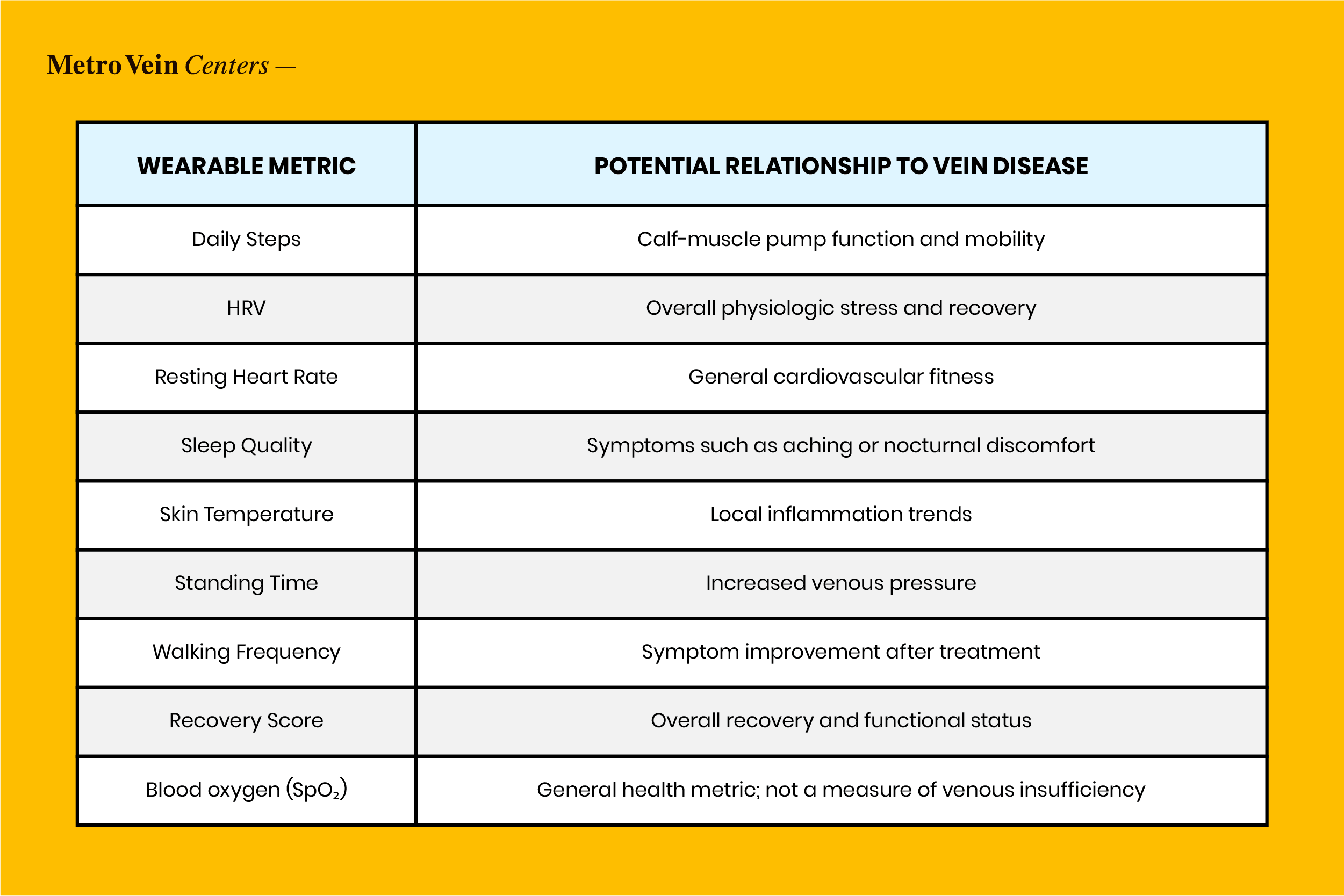
Here's a general sense of how some common wearable metrics may relate to vein health:
| Wearable Metric | Potential Relationship to Vein Disease |
|---|---|
| Daily steps | Calf-muscle pump function and mobility |
| HRV | Overall physiologic stress and recovery |
| Resting heart rate | General cardiovascular fitness |
| Sleep quality | Symptoms such as aching or nocturnal discomfort |
| Skin temperature | Local inflammation trends |
| Standing time | Increased venous pressure |
| Walking frequency | Symptom improvement after treatment |
| Recovery score | Overall recovery and functional status |
| Blood oxygen (SpO₂) | General health metric; not a measure of venous insufficiency |
None of these metrics can replace a vein evaluation. But taken together, they may offer clues worth bringing up with your vein specialist.
Vein Health Monitoring: The Next Frontier
The exciting future of wearable technology includes devices specifically made to monitor vein health and the effectiveness of treatment protocols. These include:
Wearable Pulse Oximeters: These devices, worn on your wrist or finger, measure the oxygen saturation levels in your blood. That gives you valuable information about circulation and how effectively oxygen is reaching your veins and organs. Consistent monitoring can help flag circulation issues early.
Compression Garments with Sensors: Compression therapy has long been one of the go-to tools for managing symptoms of vein disease, and now it's getting smarter. Compression garments with built-in sensors are no longer just a concept; published research has shown these sensor-equipped garments can track and adjust pressure levels in real time, giving patients and their care team a clearer picture of whether their compression therapy is actually working the way it should. It's worth remembering, though, that compression supports vein health, it doesn't cure vein disease. If you're dealing with an underlying vein condition, a compression garment (smart or not) is a helpful complement to treatment, not a replacement for one.
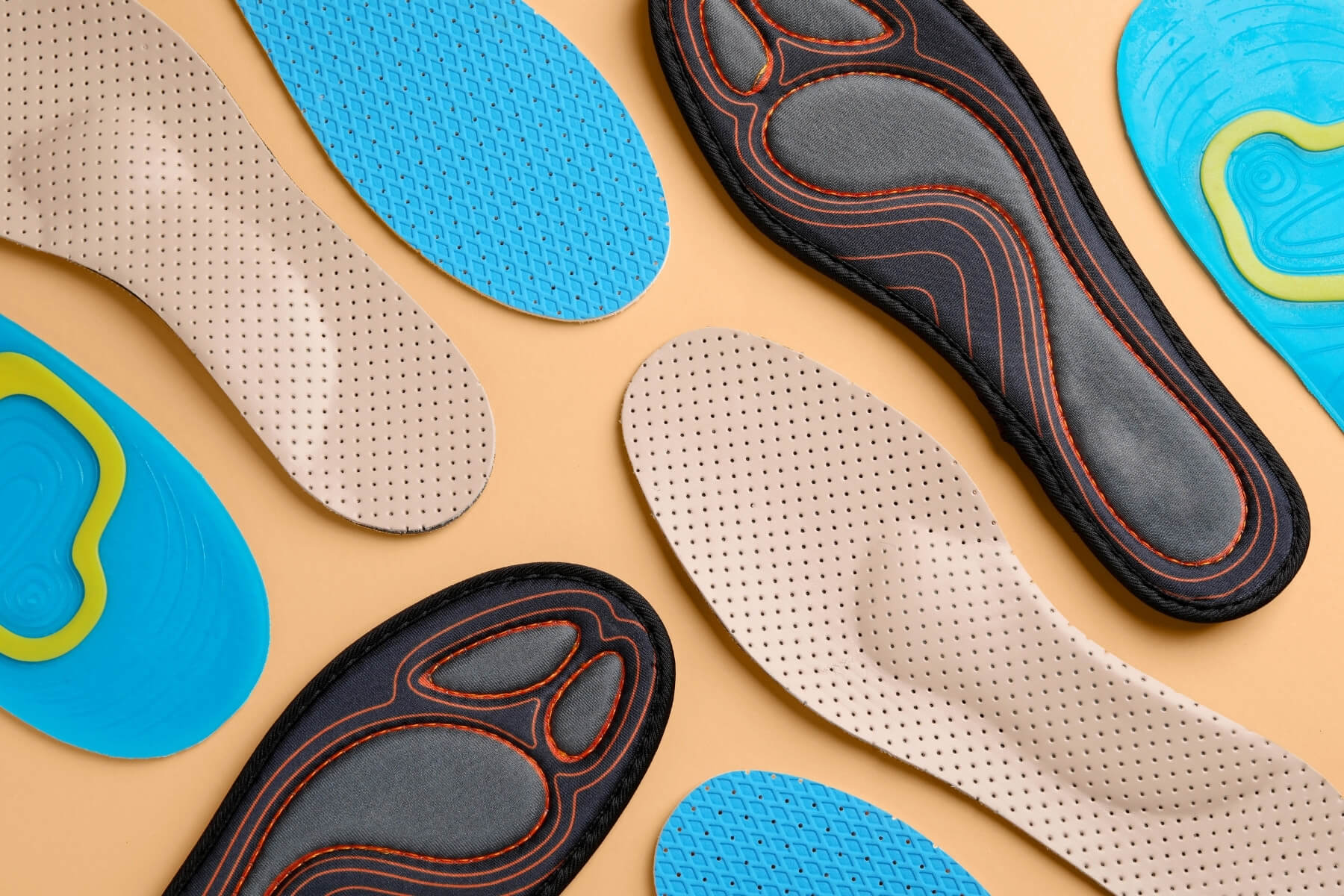
Smart Insoles: Brands like Moticon, Nurvv, Digitsole, and Plantiga now offer smart insoles equipped with sensors that analyze your gait and posture in real time. For anyone who spends long hours standing or walking, this kind of data can help identify pressure patterns that contribute to venous strain and discomfort, making it easier to catch problems before they become painful ones.
Wearable Sensors for Edema: Researchers are also developing wearable sensors capable of continuously measuring leg swelling (edema). These devices use technologies such as bioimpedance and limb circumference monitoring to objectively track fluid buildup throughout the day, potentially helping physicians evaluate disease progression and treatment response.
These emerging technologies hold real potential for managing vein health, giving patients and their care teams a more complete picture of vein function and treatment progress.
Wearable DVT & Vein-Specific Monitoring on the Horizon
Deep Vein Thrombosis (DVT)
Looking further ahead, researchers are working on wearables that could detect deep vein thrombosis (DVT). One example is the EU-backed ThrombUS+ project, which is developing a wearable device that combines compression ultrasonography with AI to flag early signs of blood clots in the deep veins of the leg.
It's important to set expectations as this technology is still in development and isn't available to consumers yet. But it points to where vein care is headed, toward tools that can catch dangerous conditions like DVT earlier, before they become medical emergencies.
AI-Powered Pattern Recognition
Future wearable platforms are also likely to lean more heavily on artificial intelligence, drawing on data from multiple sensors rather than relying on any single measurement alone. Instead of looking at heart rate or activity in isolation, AI may eventually recognize subtle patterns across heart rate, activity, skin temperature, sleep, and mobility together, helping identify which patients should consider a formal vascular evaluation.
Remote Monitoring Between Visits
As telemedicine expands, wearable devices may allow vein specialists to remotely monitor patient recovery between visits, reducing unnecessary appointments while identifying patients who need earlier evaluation.
The Future of Vein Health Is Wearable
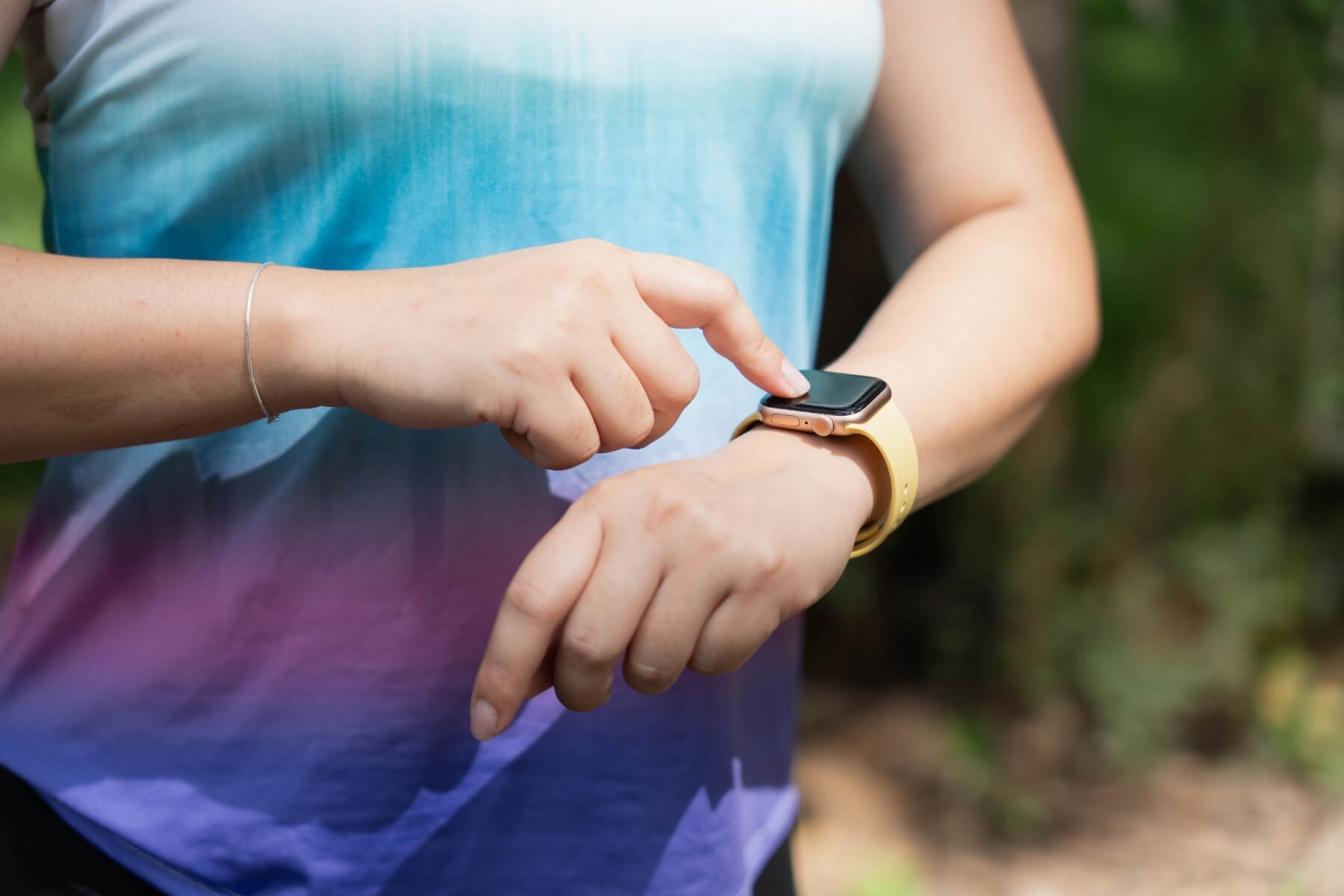
As new technology continues to evolve, wearables are only going to play a bigger role in your journey toward healthier veins and better long-term wellness. By handing you continuous, personalized data, these devices empower people to become proactive in managing their health. Whether that means using a fitness tracker to build a more active lifestyle, relying on a medical wearable to keep tabs on your vitals, or watching the vein-specific tech on the horizon, these tools help you become a more informed, more proactive version of yourself.
Wearables offer valuable data, and when combined with expert advice, you can truly take control of your vein health If you're noticing symptoms like leg swelling, heaviness, or visible veins, no device can tell you what's really going on beneath the surface, only a vein evaluation can. For a comprehensive assessment and personalized recommendations, schedule a free vein health evaluation with the experts at Metro Vein Centers.
Frequently Asked Questions
Not directly. Fitness trackers aren't diagnostic tools, but they can pick up on patterns, like reduced activity, poor recovery, or changes in heart rate, that may be worth paying attention to. If something feels off, a vein evaluation is the only way to know what's actually happening in your veins.
Sensor-equipped compression garments are a promising development, and some can now give real-time feedback on pressure levels. That said, compression of any kind manages symptoms rather than treating the underlying vein disease. It's a helpful support tool, not a substitute for medical treatment.
Consumer pulse oximeters can give a useful general sense of your blood oxygen levels and are generally reliable for everyday tracking. They're not a substitute for the more precise circulation testing your vein specialist can perform during an evaluation.
Smart insoles were originally built with athletic performance in mind, but the gait and pressure data they collect can also flag patterns linked to venous strain, especially for people who are on their feet all day. It's a useful data point, though not a diagnosis.
They can be a helpful early signal. If your wearable data shows declining activity, poor recovery, or other changes, and you're also noticing physical symptoms like swelling, aching, or visible veins, that's a good cue to stop guessing and get answers. Schedule a free vein evaluation with Metro Vein Centers to find out what your body is really telling you.
No. Current consumer wearables cannot diagnose deep vein thrombosis (DVT). Sudden swelling, pain, redness, or warmth in one leg should never be ignored, even if your smartwatch shows normal readings. If you develop symptoms suggestive of DVT, seek immediate medical attention.

Dr. Hugh Pabarue
Meet Dr. Hugh Pabarue, a board-certified physician and vein specialist with over 15 years of experience in Metro Detroit. Schedule an appointment with him in Macomb & St. Clair Shores today.
Meet Dr. Hugh Pabarue
Trusted insight from the nationally accredited, board-certified vein doctors at Metro Vein Centers.